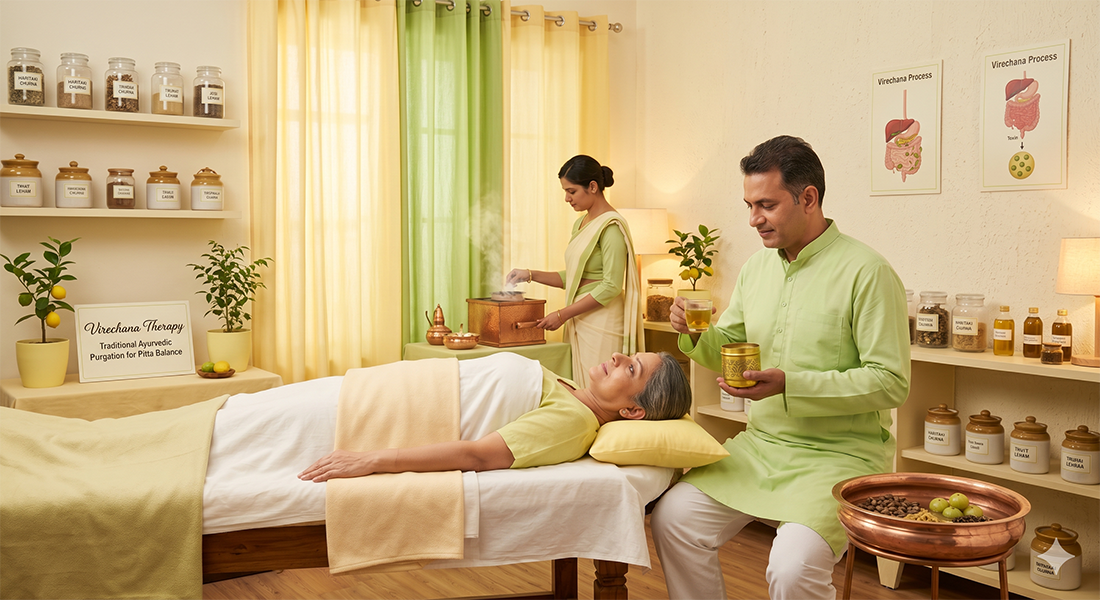
Panchakarma therapy includes the elimination of increasing doshas from the body to maintain the condition of health for a longer time. Virechana is also one of the Panchakarma therapies in which purgation is induced by drugs to eliminate the excess of Pitta dosha from the body. It prevents the body from diseases or helps in treating them most effectively.
The evaluation of Virechana is based on various parameters like shuddhi(cleansing), vaigiki (number of times of stool passed), Manaki (quantity of stool), laingiki (symptoms-based assessment) and Antyaki (assessment of ending of purgation) Shuddhi.
The elimination of doshas is classified on the basis of low, medium and high quantity (i.e. Hina, Madhyama and Uttamshuddhi).Virechana for diabetes treatment:
Diabetic patients need good blood vessel care. They also need quick wound healing. Hence, Virechan plays a very important role in them. Also, burning sensation in palms and feet, which occurs as a complication of diabetes, has Pitta involvement, which can be very well treated with Virechana treatment.
Effect on Tridosha:
Virechan treatment is indicated in High Pitta conditions – like skin disorders, blisters, abscesses, liver disorders, etc. Pitta is associated with Kapha, where Pitta is the dominant Dosha, as in certain types of vomiting, acid peptic disorders, etc. Pitta is associated with Vata, as in the case of gout.
Types of Virechana karma
1. Anulomana
2. Sansarjana
3. Bhedana
4. Rechana
The Procedure of Virechana Karma
In this detoxification therapy, all vitiated doshas and toxins are eliminated through the return. It includes intake of Ayurvedic and herbal medicines, which reduce doshas and toxins from the body and collect them in the abdomen. Mainly, Pitta is situated at the level of the intestine. So, it is the best way to expel it through the anal route. The Ayurvedic medicines which are used for the procedure may vary from person to person, depending on the patient’s digestive strength.
Three steps of Virechanakarma
- Poorvakarma is the preparatory procedure. It includes Deepana and Pachana, followed by snehapana (oral intake of medicated ghee) for 3-7 days as per the condition of the patient. This is followed by Abhyana (external use of oil) and swedana (sudation) for 3 days.
- Pradhanakarma is the administration of the drug of virechana as per the disease. The drug used for virechana is Triphala, prepared from Haritaki, Vibhitaki, and Amalaki. Castor oil is also added, 30-35 ml according to the requirement.
- Pashchatakarma is known as samsarjanakarma. In this procedure, the patient is advised of the specific dietary regimen for 3-7 days, depending on the number of bouts of bowel movements administered during virechana treatment.
Benefits of Virechana in Ayurveda
- Flushes out the toxins and excess mucus from the GK tract, and it improves digestion.
- Clears congestion from the liver and improves metabolism and fat digestion.
- Gets relief in many gastrointestinal disorders.
- It improves the condition of skin disorders like rashes and allergies.
- It helps in treating diseases like constipation, piles, acidity, ulcers, liver, jaundice, and inflammation.
- Cleanses the body from poisoning.
- Relieves headache, anaemia, and pain in the large intestine.
- It helps manage diabetes and heart disease.
- Reduces gynaecological disorders.
- Prevention in Virechanakarma
- Patients below the age of 18 and above 80 years are excluded.
- Patients suffering from diabetes mellitus should not be included.
- Patients with status eczematous conditions are also avoided.
- Routine and microscopic tests of urine and blood are to be done.