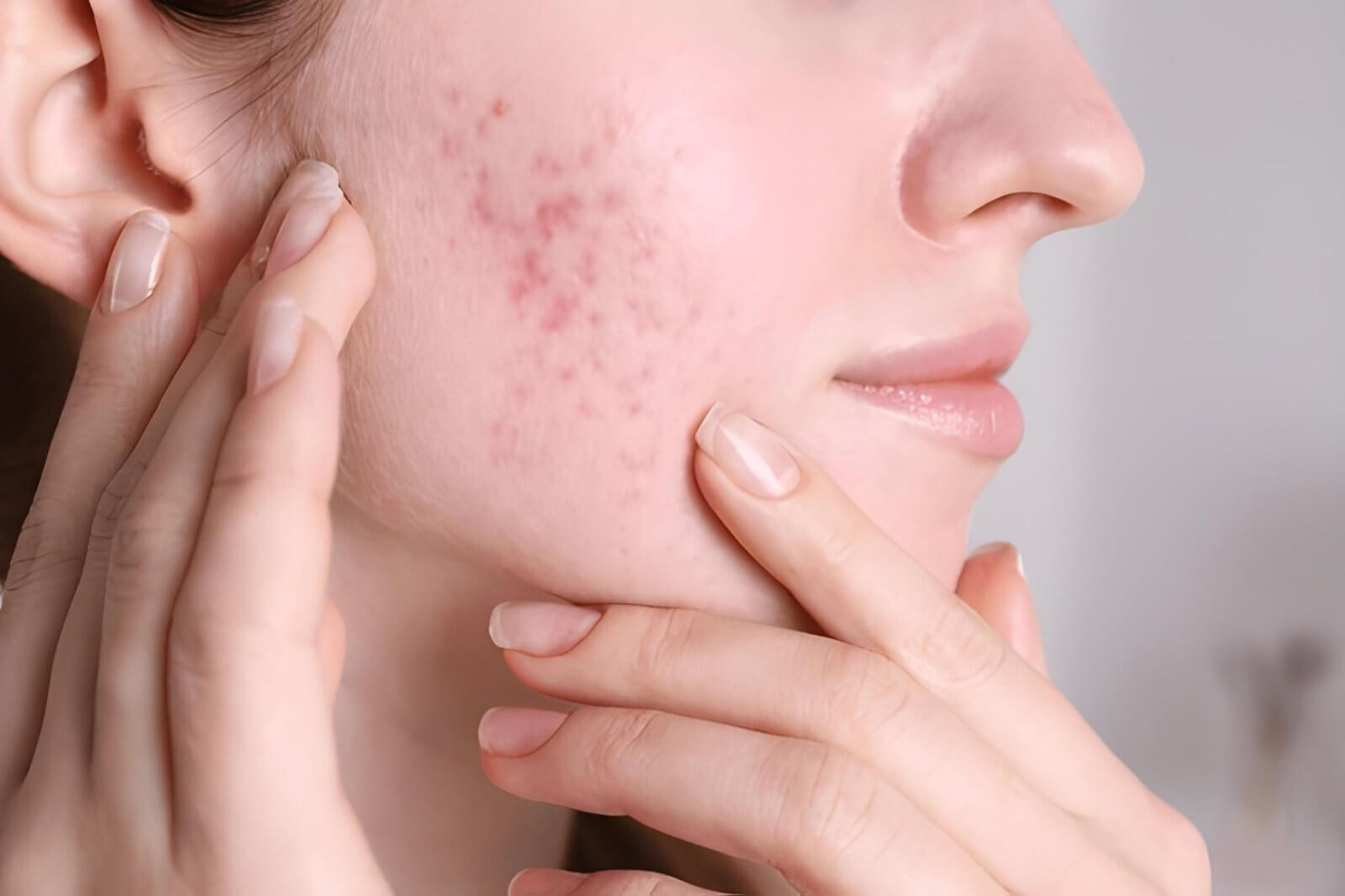
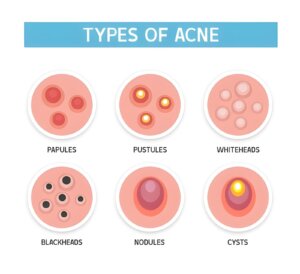
 Acne (Acne vulgaris) is a common, long-term skin condition that occurs when hair follicles become clogged with oil (sebum), dead skin cells, and bacteria.
While people often use the words interchangeably, a pimple is a specific type of lesion caused by acne, whereas acne is the overarching medical condition.
How Pimples Form
Every pore on your skin opens to a hair follicle, which contains a sebaceous (oil) gland. Acne develops through a 4-step process:
Excess Sebum Production: Hormones or environmental factors trigger glands to secrete excess oil.
Dead Cell Accumulation: Dead skin cells fail to shed properly and mix with the oil.
Pore Clogging: The mixture hardens into a plug (comedone) within the follicle.
Bacterial Overgrowth & Inflammation: Naturally occurring bacteria (Cutibacterium acnes) multiply inside the blocked pore, causing redness, swelling, and pus formation.