
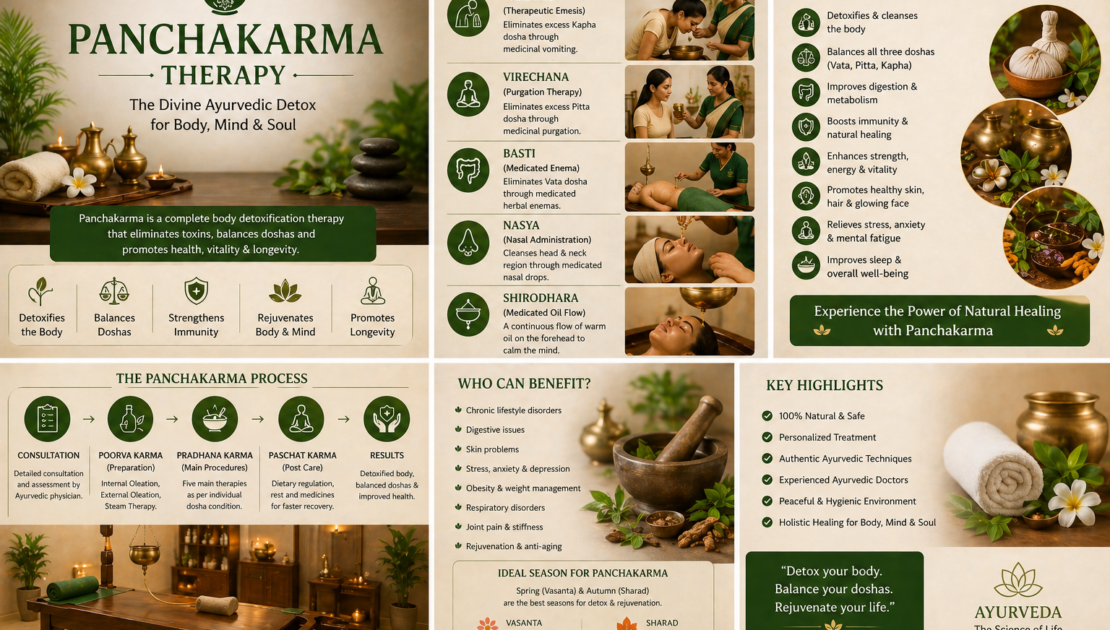
Panchakarma, an integral part of the traditional Indian medical system of Ayurveda, is a set of deep detoxification and rejuvenation procedures. It is more than just a spa treatment; it is a profound journey towards holistic wellness, balancing the body, mind, and spirit. If you’ve ever felt the need for a total restart, a clearing away of physical and mental accumulated toxins, then Panchakarma might be the answer you’ve been looking for.
What is Panchakarma?
The word ‘Panchakarma’ is derived from the Sanskrit words ‘Pancha’ meaning five and ‘Karma’ meaning action or process. Therefore, Panchakarma is a series of five distinct procedures designed to eliminate accumulated toxins from the deep tissues of the body and restore balance to the three doshas (Vata, Pitta, and Kapha) – the fundamental biological energies in Ayurveda.
These procedures are not random; they are a carefully guided, individualized program tailored by a qualified Ayurvedic doctor to address your specific needs. The five main actions of Panchakarma are:
-
Vamana (Therapeutic Vomiting): Intentionally inducing vomiting to remove excess Kapha dosha, particularly effective for respiratory issues and digestive disorders.
-
Virechana (Therapeutic Purgation): Administering herbs to cleanse the intestines and eliminate excess Pitta dosha, beneficial for liver, blood, and skin disorders.
-
Basti (Medicated Enema): Using oil-based or herbal enemas to cleanse and lubricate the colon, primarily for balancing Vata dosha, addressing chronic conditions, and improving elimination.
-
Nasya (Nasal Administration): Instilling herbal oils, powders, or juices into the nostrils to cleanse the head and neck region, treating conditions like chronic sinusitis, headaches, and Vata-related neurological issues.
-
Rakta Mokshana (Bloodletting): Note: This procedure is generally not practiced in modern clinics due to various reasons. Traditionally, it involved various methods to remove impure blood, particularly for specific Pitta and blood-related disorders.
The Phases of Panchakarma
A typical Panchakarma treatment is not a single session but a structured process that can take anywhere from a few days to several weeks. It involves three distinct phases:
Phase 1: Poorva Karma (Preparatory Phase)
This phase aims to prepare the body for the elimination process. It focuses on loosening toxins and bringing them to the digestive tract. It typically includes:
-
Snehana (Oleation): Applying and consuming warm, medicated oils (internal and external) to lubricate tissues and facilitate toxin movement.
-
Swedana (Sudation/Sweat Therapy): Using herbal steam or other heat therapies to open up pores and encourage detoxification through sweat.
Phase 2: Pradhana Karma (The Five Actions)
This is the main treatment phase where one or more of the specific Panchakarma procedures (listed above) are performed under strict supervision. The choice depends entirely on your constitution, dosha imbalances, and present conditions.
Phase 3: Paschat Karma (Post-Treatment Phase)
This phase is crucial for stabilizing the body and mind after the intense purification. It focuses on gentle rejuvenation and gradual re-entry into daily life. It includes:
-
Samsarjana Karma (Dietary Regimen): A specific, gradually transitioning diet to restore digestive fire and prevent re-accumulation of toxins.
-
Rasayana (Rejuvenation Therapy): The use of specific herbs, minerals, and practices to rebuild and strengthen the tissues.
-
Lifestyle Guidelines: Personalized recommendations for daily routines, exercise, and activities to maintain the benefits of the treatment.
Who can benefit from Panchakarma?
Panchakarma is designed to benefit almost everyone seeking improved health and well-being. However, it’s particularly valuable for:
-
Detoxification: Deeply cleansing the body from accumulated environmental, dietary, and emotional toxins.
-
Chronic Health Conditions: Helping with various ailments like arthritis, digestive disorders, skin conditions, asthma, and chronic fatigue.
-
Stress and Mental Health: Balancing Vata dosha can alleviate anxiety, depression, and improve sleep and mental clarity.
-
Age-related Concerns: Rejuvenation can improve vitality and slow down the aging process.
-
Disease Prevention: By maintaining dosha balance and eliminating toxins, Panchakarma can strengthen immunity and prevent future illness.
Is Panchakarma safe?
Yes, Panchakarma can be safe and effective when performed under the supervision of a qualified Ayurvedic doctor in a reputable center. It’s crucial to disclose your complete medical history and present conditions to the doctor before commencing treatment. However, it’s not suitable for everyone, especially those who are:
-
Pregnant or breastfeeding
-
Very elderly or frail
-
Experiencing acute severe illness or infection
-
Having certain pre-existing conditions (e.g., uncontrolled bleeding disorders)
Important Considerations Before Starting Panchakarma
-
Consult a Qualified Ayurvedic Doctor: Never attempt Panchakarma on your own. Proper diagnosis and guidance are essential.
-
Choose a Reputable Center: Research and select a center with well-trained practitioners and good hygiene standards.
-
Commitment and Dedication: Panchakarma is a structured program that requires full participation in dietary and lifestyle changes.
-
Be Honest about Your Health: Share all details about your health and medications with your Ayurvedic doctor.
-
Listen to Your Body: Follow the instructions carefully and always inform your therapist or doctor about any discomfort.
Panchakarma is not a quick fix; it’s an investment in your long-term health and well-being. It can be a transformative experience, offering not just physical healing but a deeper understanding of your own body and its unique requirements. If you feel called to this ancient path of healing, seek a reputable Ayurvedic professional and embark on a journey that could lead to profound and lasting transformation.


